
One conversation.
Three platforms.
Kuma joins a channel on Stoat, Discord and Fluxer into a single room. People talk to each other without knowing, or caring, which app anyone else opened. That is the unusual part. The rest is a full moderation, anti-raid, levelling and games bot, behaving the same way on all three.
A moderator's dream toolkit.
Warns, mutes, kicks, bans and temp-bans, each one filed as a numbered case with the reason, the moderator and the chat around it. Notes only staff can see. Purges that keep a transcript. A panic lockdown for when it all goes wrong at once.
And every one of them explains itself to the person on the receiving end.
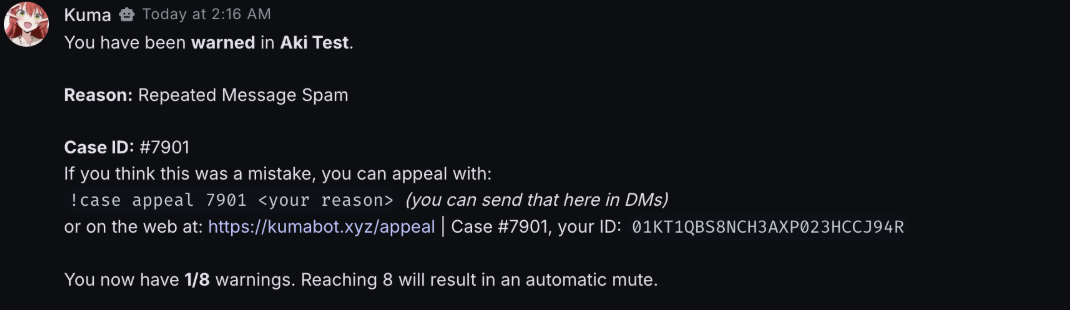
The member gets this in DMs the moment it happens.
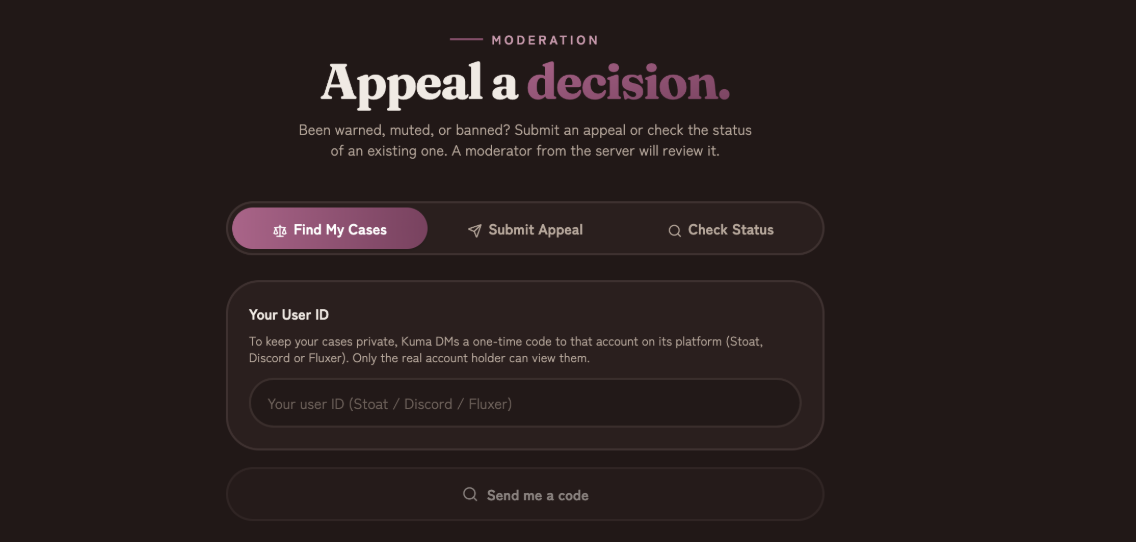
They appeal wherever suits them.
In the server, in a DM to Kuma, or on the web. The web matters because a banned member can't message the server that banned them, so Kuma sends a one-time code to prove the account is theirs before showing a single case.

Staff see the appeal against the original case, with the surrounding chat attached.
Approve it and the punishment lifts itself.
The mute ends. The ban is undone. The case closes, and the member is told the outcome. No moderator has to remember to go back afterwards and tidy up, which is how people end up still banned six months after they were forgiven.
Most of it never reaches a moderator.
AutoMod reads for shape rather than keywords: repeated characters, walls of text, Zalgo, emoji floods, mass mentions, invite links. It strips leetspeak, accents, zero-width characters and homoglyphs first, so s c a m and its lookalike spellings are all the same word to it.
Above that sits a three-tier content filter, separating everyday nuisance from slurs and genuinely malicious links. URLs are checked against abuse.ch's live threat feed, and images are scanned rather than taken on trust.
Raids get boring quickly.
New arrivals pass an account-age gate and a risk score built only from signals your server can already see. Anything doubtful can be held in a waiting room instead of being let straight in, and a spike in the join rate locks the place down on its own.
Raid Guard reaches further than one server. An account that other Kuma-protected communities have removed in the last day arrives already isolated, so a raid that has been somewhere else first gets nowhere here. There is a panic lockdown too, for the times you can see it coming.
One ban, not the same ban three times.
When a community spans platforms, a punishment in one server can carry to the others. It stays off until you switch it on, and it is directional: you set, once, whether Discord staff may act on Stoat, whether Stoat staff may act on Fluxer, and every other pairing. Staff can also reply to a bridged message with a moderation command and have it land on the person who actually sent it, wherever they are.
Counting game, or counting games?
Twenty came from Discord. Twenty-one from Stoat. Twenty-two from Fluxer. One game, three apps, and nobody had to agree on anything first.
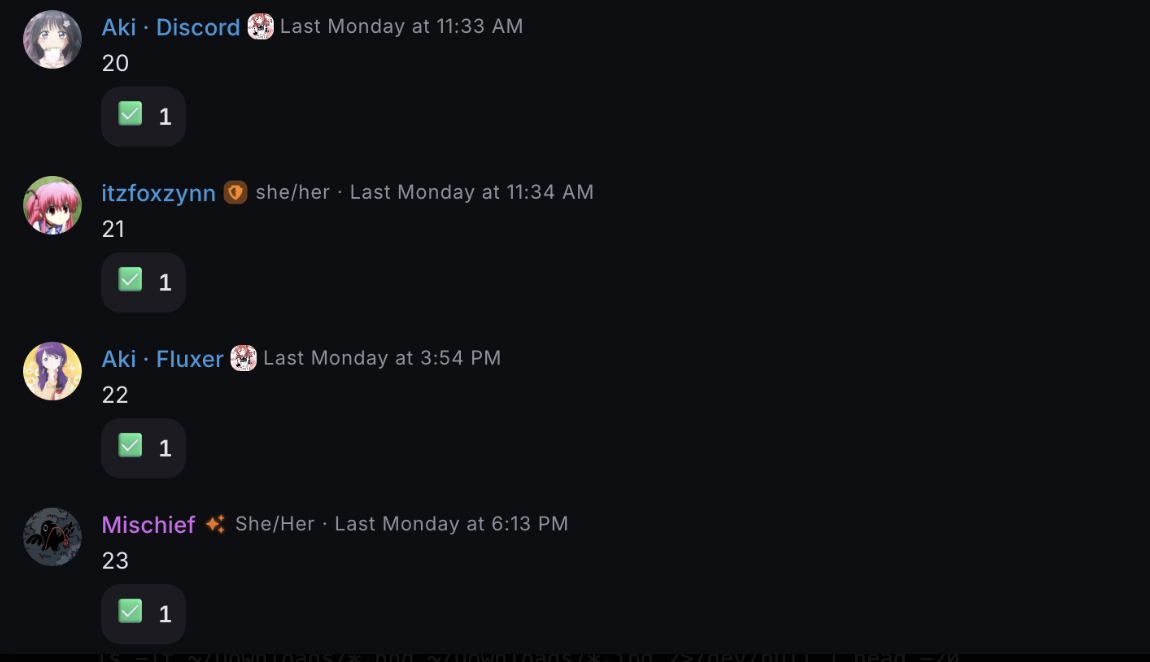
Both readings hold. There are about two dozen in total, and seven of them treat a bridge as one table: counting, word chain, chess, connect four, tic-tac-toe, rock paper scissors, would you rather. The rest, trivia and Wordle and Mafia and the gacha among them, stay inside the server they were started in.
One message, drawn three ways.
Kuma relays under the sender's own name and avatar, so a bridged channel reads like a channel rather than a feed of forwarded mail. Replies carry across. So do edits, deletions, reactions and the channel someone mentions.



Kuma doesn't keep your messages.
When a message is edited or deleted, the text goes to your server's own log channel. That channel belongs to your moderators, who can clear it whenever they like. Kuma stores a pointer to that log post, not a copy of what was said.
Open a Chat Snapshot on a case from weeks ago and it fetches the text back out of those logs at that moment. Delete the log and the text is genuinely gone: the dashboard says so, rather than producing a copy it had quietly kept.
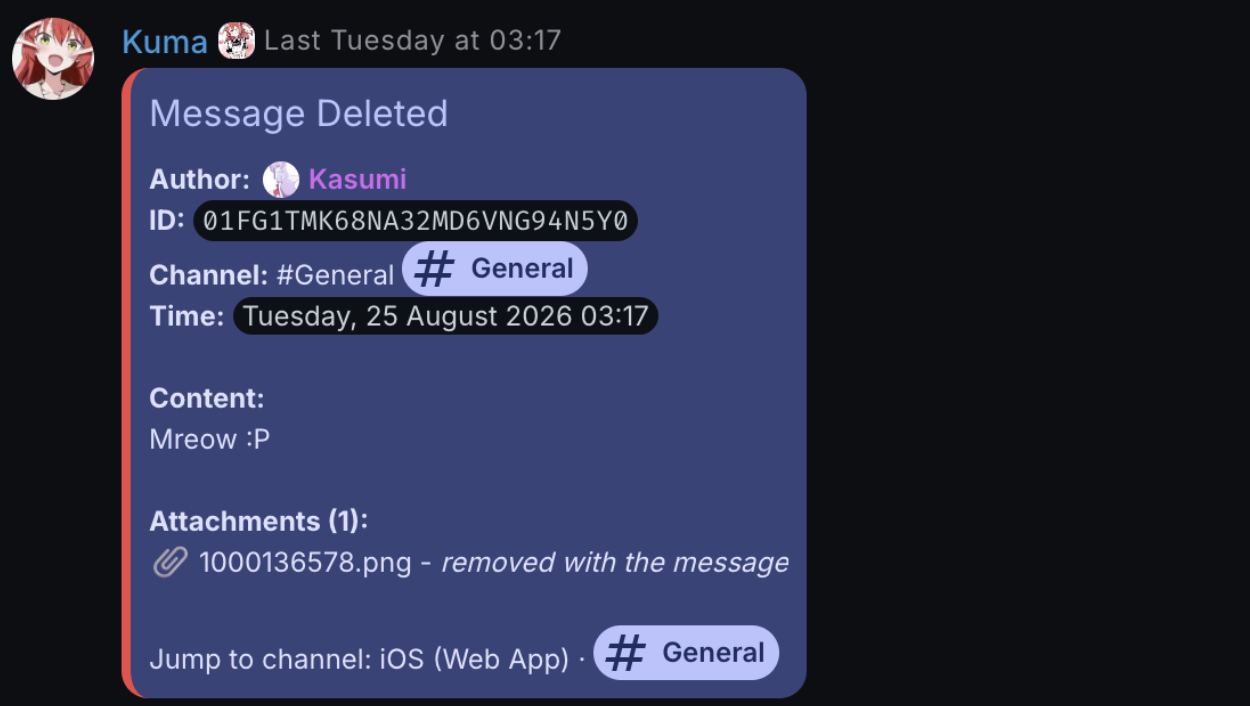
A deletion, logged where your staff can see it.
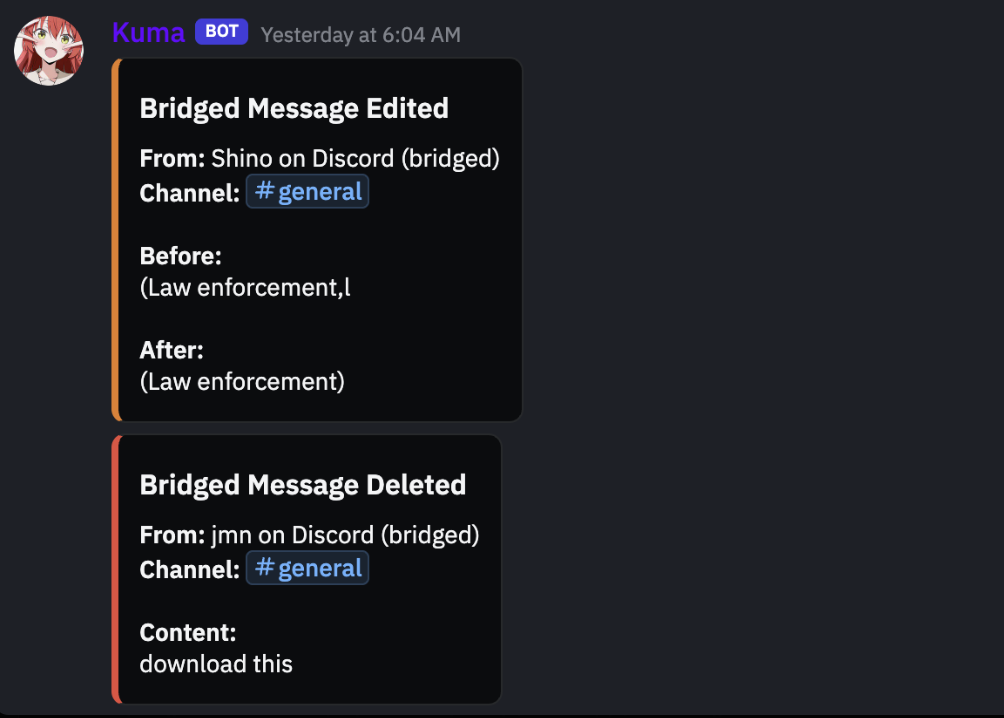
Edits and deletions carry across the bridge too.
One login. Every server you run.
Sign in once and reach every community you own, whichever platform each one lives on.
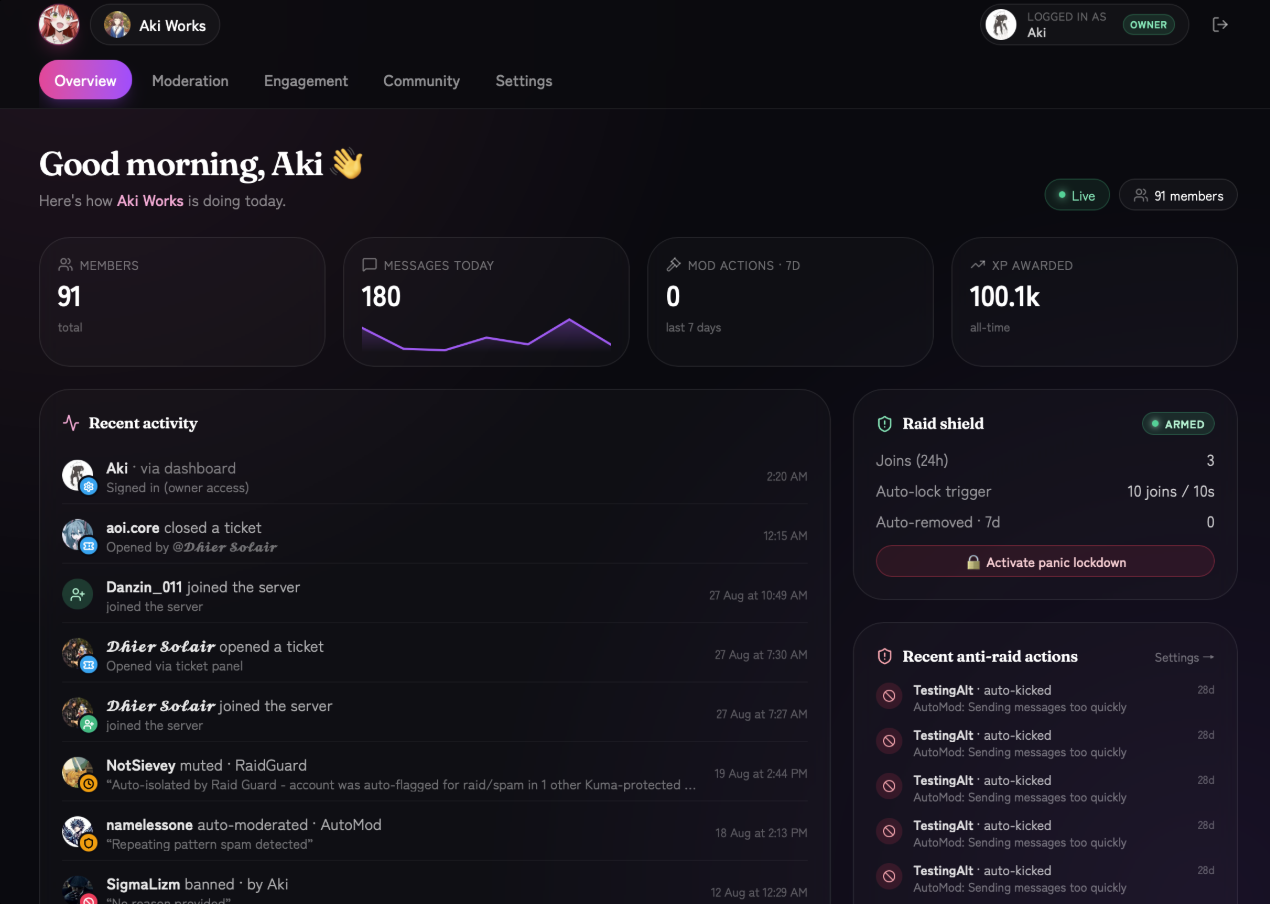
Per server: what happened today, what AutoMod caught, and a raid shield you can arm by hand when something feels wrong.
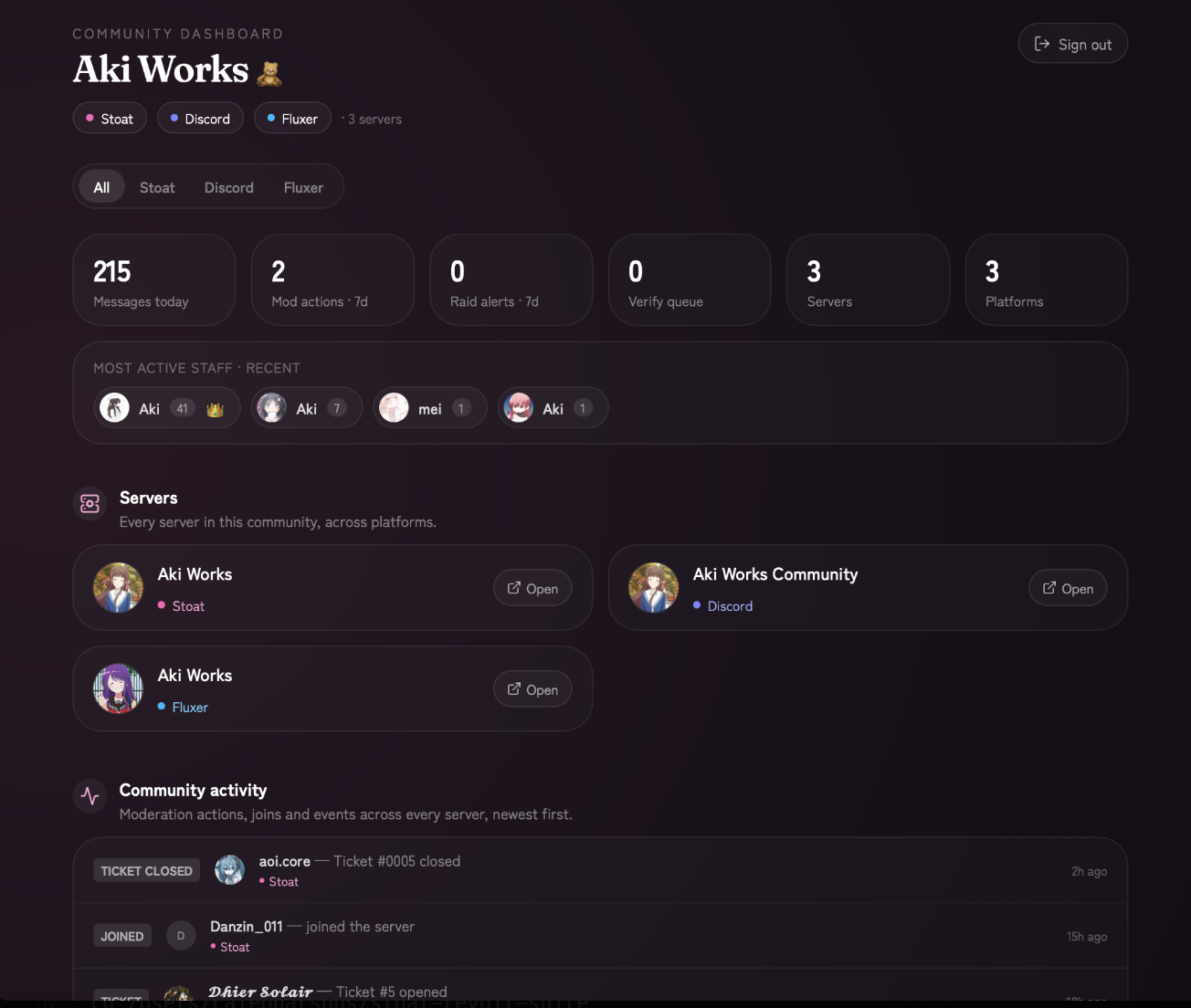
And one view above all of them.
If your community spans several platforms, the community dashboard treats them as one place: shared staff, one activity feed, and a policy for which platform's moderators may act on which other.
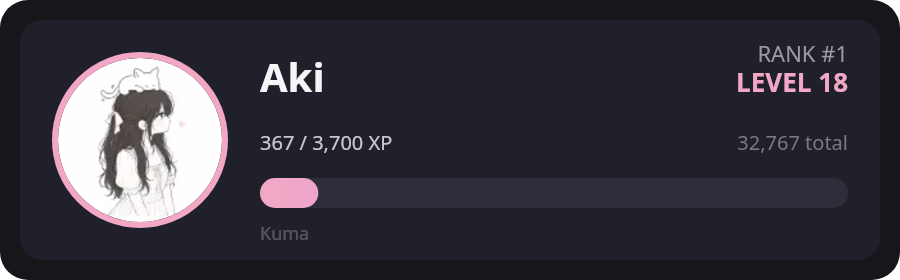
Things it makes for you.
Rendered properly, as images, so they look the same everywhere they land.

Reply to anything with !quote.
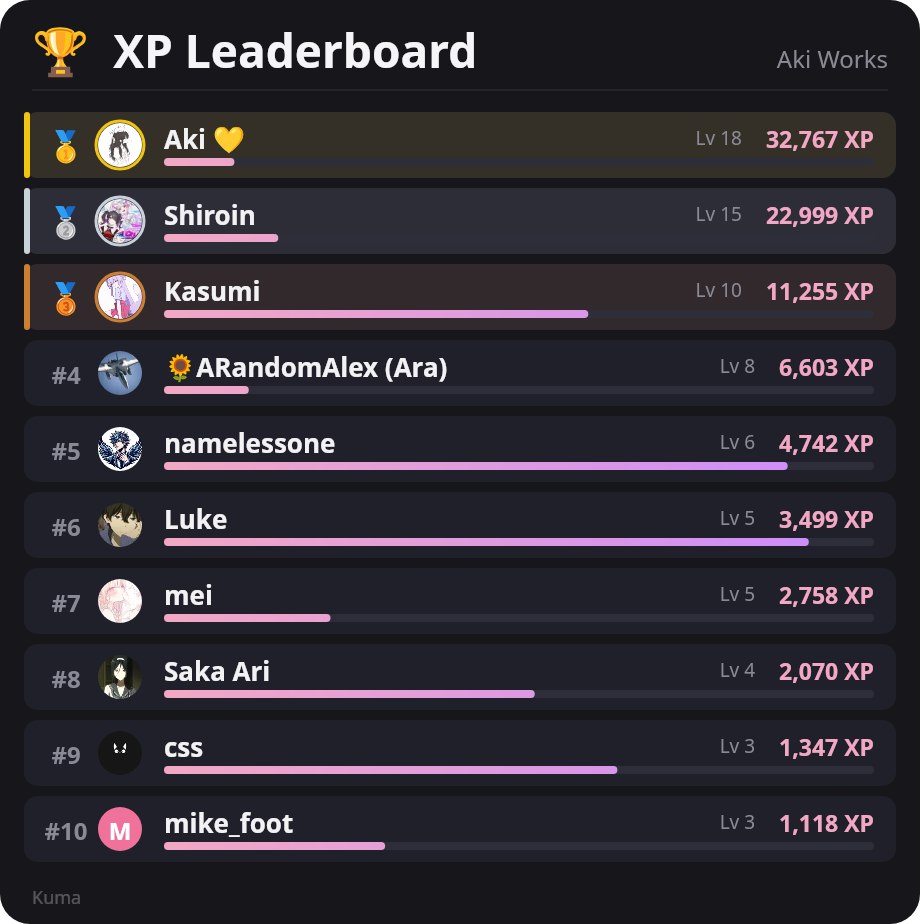
Every server also gets a full leaderboard on the web, past the top ten the card can fit.
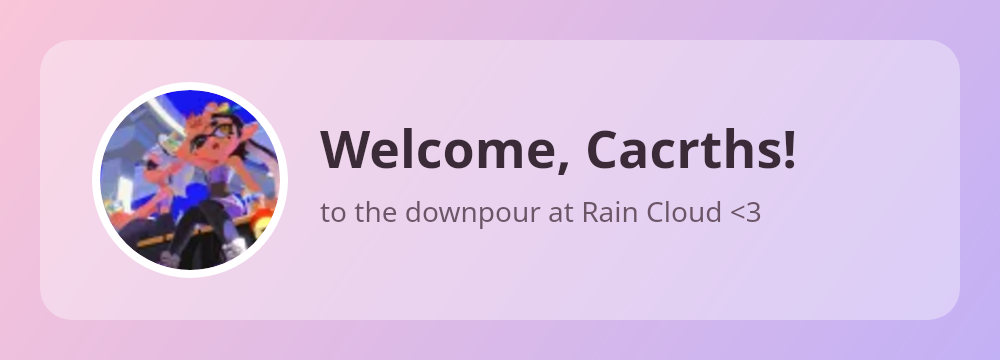
Welcome cards use your own background and wording.
The rest of it.
24 modules you can switch off individually, and a few hundred commands behind them.
Moderation
- !ban
- !tempban
- !mute
- !warn
- !note
- !panic
- !lock
- !purge
- !case
AutoMod
- !contentfilter
- !antiraid
- !agegate
- !blacklist
- !threshold
- !keyword
Games & economy
- !mafia
- !shiritori
- !blackjack
- !connect4
- !wordle
- !trivia
- !slots
- !daily
- !shop
Community
- !rank
- !leaderboard
- !starboard
- !rolemenu
- !xpboost
- !announce
- !ticket
- !suggest
- !remind
Feeds
- !rss
- !bluesky
- !feed
- !webhook
- !crosspost
Config
- !toggle
- !setlog
- !autorole
- !verify
- !welcome
- !levelroles
Want a feel for the dashboard first?
Have a click around a working one with nothing installed. Owners and moderators each get their own view when the real thing is set up, so your staff aren't waiting on you to tell them what happened.
For your own server, run !dashboard and Kuma sends you a private link. Signing in finishes in the browser with a one-time code, so a link someone forwards is no use to them.
Add Kuma and get on with it.
Nothing is switched on that you didn't ask for. Bridging stays off until an admin sets it up.